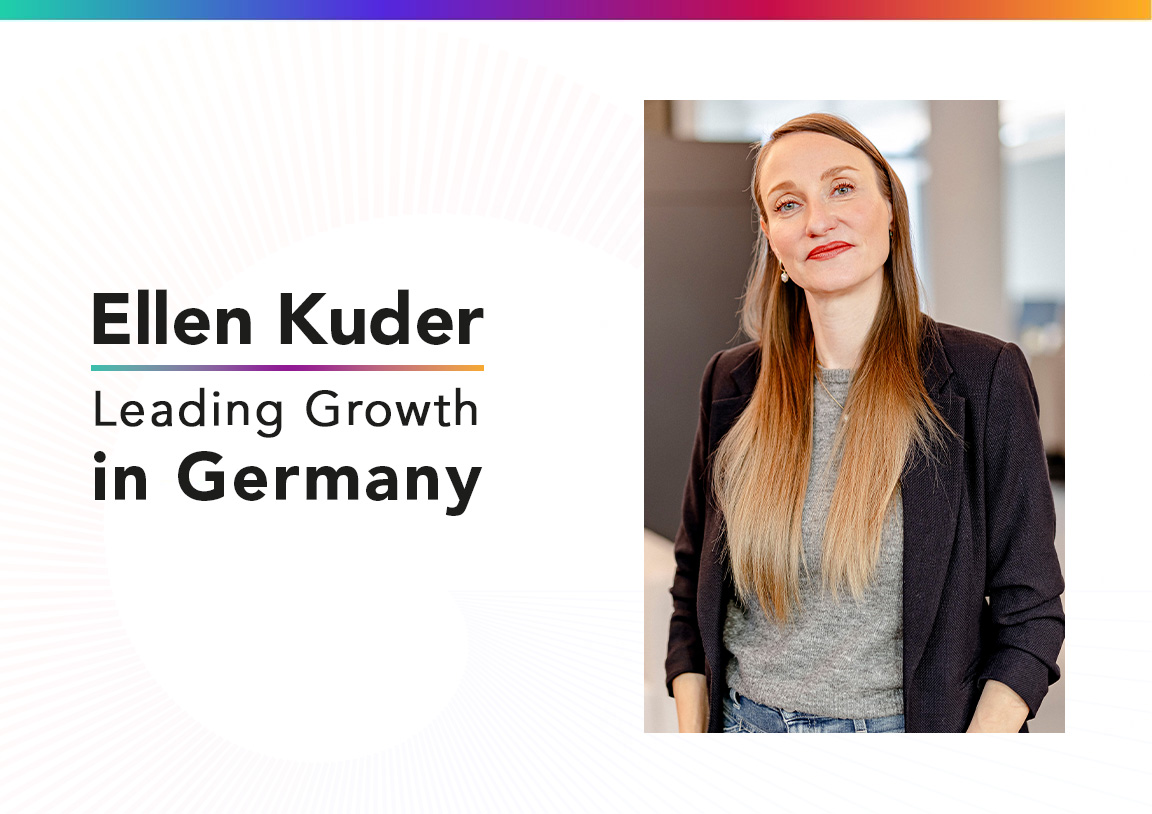
We’re pleased to introduce Ellen Kuder, Draivi’s new Country Manager for Germany. With decades of experience building and scaling financial and platform technology businesses across Europe, Ellen brings deep knowledge of the German market and a track record of entering industries at the moment platform infrastructure is being decided. Germany is Draivi’s most structurally complex market to date, and one where the opportunity to connect brokers and lenders at scale is significant. Broker penetration in mortgage lending has doubled since 2014, from roughly 25% to over 50%¹, and the infrastructure supporting that shift is still maturing. Ellen joins to lead that next phase of growth. Now, let’s hear more from Ellen herself about her journey and what brought her to Draivi.
You’ve built businesses across financial services, mobility, and enterprise technology. What connects those experiences?
Every role was a platform bet made before the market had fully decided which infrastructure would win. At Microsoft, Skype for Business was displacing legacy communication infrastructure across enterprise Germany. At a MaaS startup, we built the first demand-responsive transit layer on top of public transport networks before the category had a name. At AfterPay, now operating as Riverty, we were building BNPL distribution infrastructure while most traditional banks and lenders were still deciding whether the product was real.
Draivi operates the same logic at a different layer. It is a performance-based growth platform that connects users to brokers and lenders, matching demand to the right product and provider at scale. Different industries, same pivot point.
Germany is often described as a difficult market, highly regulated and slow to adopt new platforms. How do you approach that?
The characterization is accurate but often misread. Germany is not slow because institutions resist change. It is slow because institutions were built for a different context and the switching costs are real. Traditional banks and lenders did not fall behind through indifference; they were rationally designed for relationship banking at a regional scale. That is a structural reality, not a cultural one.
What that means in practice is that the commercial approach has to be built on demonstrated reliability. Traditional banks and lenders do not respond to disruption framing. They respond to platforms that reduce operational friction without asking them to rebuild their compliance infrastructure. That is the conversation Draivi enables.
What drew you to Draivi specifically?
Several things, and they reinforced each other. The model first: Draivi is performance-based, lenders and brokers pay for results, not access. In a market where institutional trust is earned slowly and commitment comes late, that commercial logic removes the biggest barrier before the conversation even starts. Most platforms in this space ask for upfront commitment before they have proven value. Draivi inverts that.
Then the business itself. Draivi is bootstrapped and profitable, which in a market full of VC-backed platforms burning through capital is not a small thing. It means the commercial logic is real, not subsidised. That matters when you are building long-term partnerships with institutions that will notice if the platform behind them is not standing on solid ground.
And the team. A group of people who have built this from the ground up, across multiple markets, without outside money. That combination of ambition and discipline is not common. Joining at this stage, with that foundation already in place, felt like the right moment.
What does success look like in the first year?
Growth in year one means converting Draivi’s structural advantage into anchor partnerships, lenders and brokers for whom the platform becomes a core part of how they generate and convert volume. The performance-based model removes that barrier from the start.
Germany moves slowly toward commitment and quickly once trust is established. And once established, those partnerships tend to stay. That stickiness is not loyalty for its own sake, it is because switching costs are real and a platform that delivers consistent results becomes embedded in how a business operates. That is what we are building toward.
Ville Kymäläinen, CEO at Draivi comments:

“Germany is the market where getting the leadership hire right matters most. Ellen brings something rare: deep P&L experience in German financial services, a track record of building commercial operations in structurally complex markets and a clear-eyed view of how this industry actually works. She doesn’t need to be convinced that Germany is a significant opportunity. She’s spent twenty years operating inside it. We’re confident she’s the right person to build Draivi’s position here.”
¹ McKinsey, German Retail Banking Snapshot 2025